11 May 2026 – need2know
Minority investments in M&A/PE are not a mere straightforward governance exercise. Structural and contractual considerations increasingly determine transaction dynamics, investor protection and ultimately exit outcomes.
In our fourth M&A Spotlight edition (vol. 4), bpv Huegel PE/M&A partner Michal Dobrowolski outlines “Minority Investments in M&A/PE – Key Considerations”, focusing on five core building blocks that shape deal certainty and value preservation. Particular emphasis is placed on governance design, economic protection mechanisms and exit architecture – areas where careful structuring is essential to maintain influence, mitigate dilution risks and ensure realisable exit optionality.
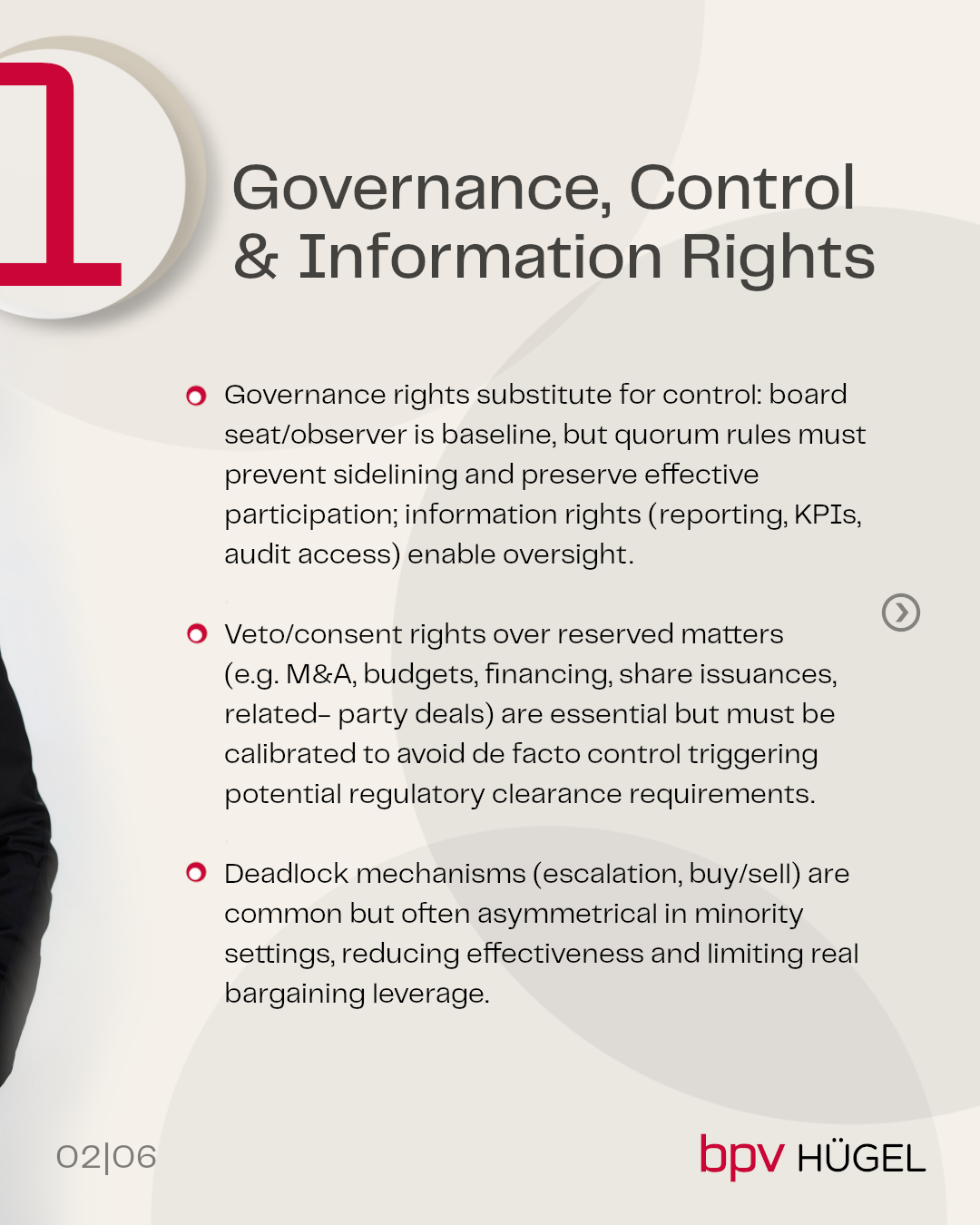
1. Governance, Control & Information Rights
- Governance rights substitute for control: board seat/observer is baseline, but quorum rules must prevent sidelining and preserve effective participation; information rights (reporting, KPIs, audit access) enable oversight.
- Veto/consent rights over reserved matters (e.g. M&A, budgets, financing, share issuances, related‑party deals) are essential but must be calibrated to avoid de facto control triggering potential regulatory clearance requirements.
- Deadlock mechanisms (escalation, buy/sell) are common but often asymmetrical in minority settings, reducing effectiveness and limiting real bargaining leverage
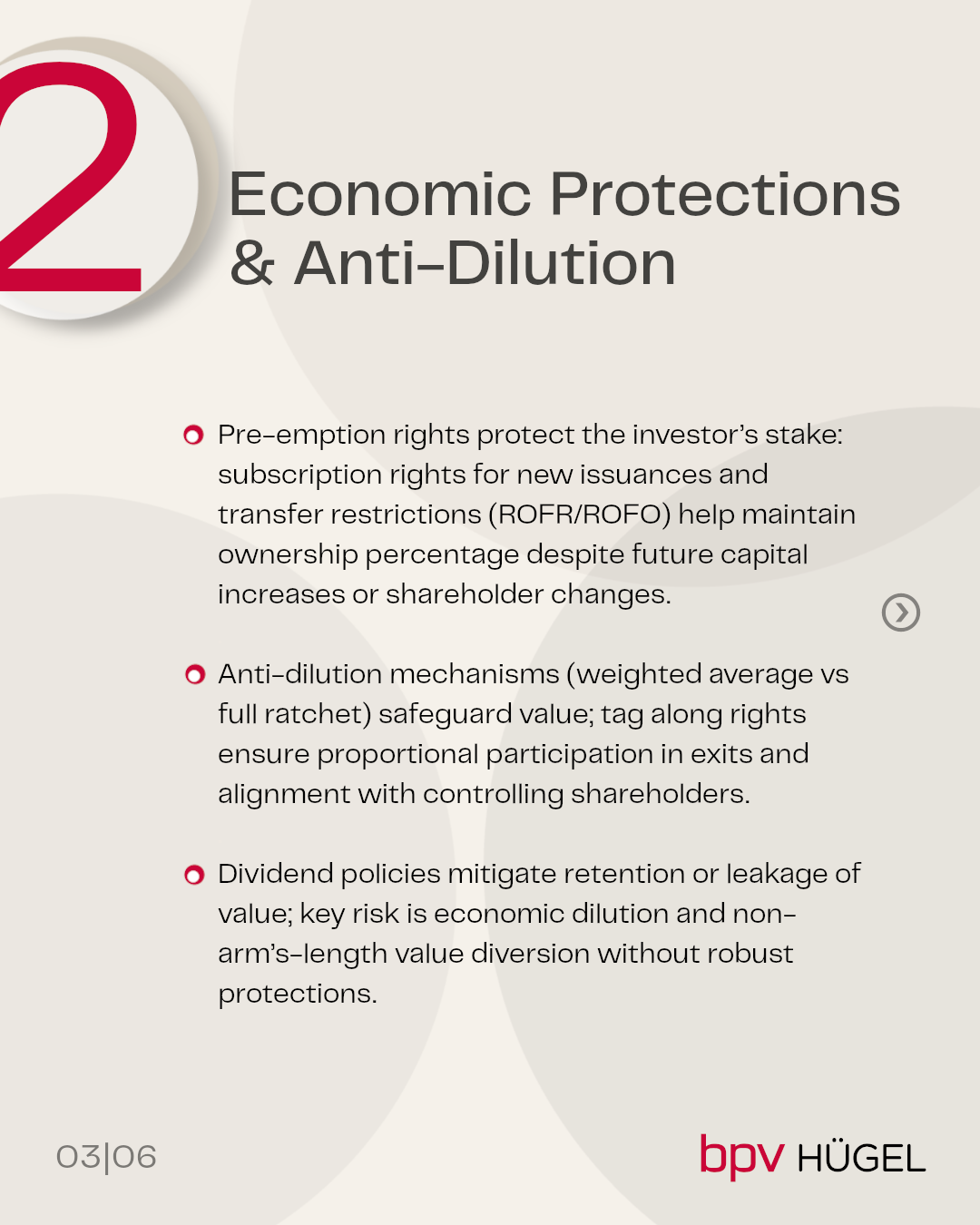
2. Economic Protections & Anti-Dilution
- Pre‑emption rights protect the investor’s stake: subscription rights for new issuances and transfer restrictions (ROFR/ROFO) help maintain ownership percentage despite future capital increases or shareholder changes.
- Anti‑dilution mechanisms (weighted average vs full ratchet) safeguard value; tag‑along rights ensure proportional participation in exits and alignment with controlling shareholders.
- Dividend policies mitigate retention or leakage of value; key risk is economic dilution and non‑arm’s‑length value diversion without robust protections.
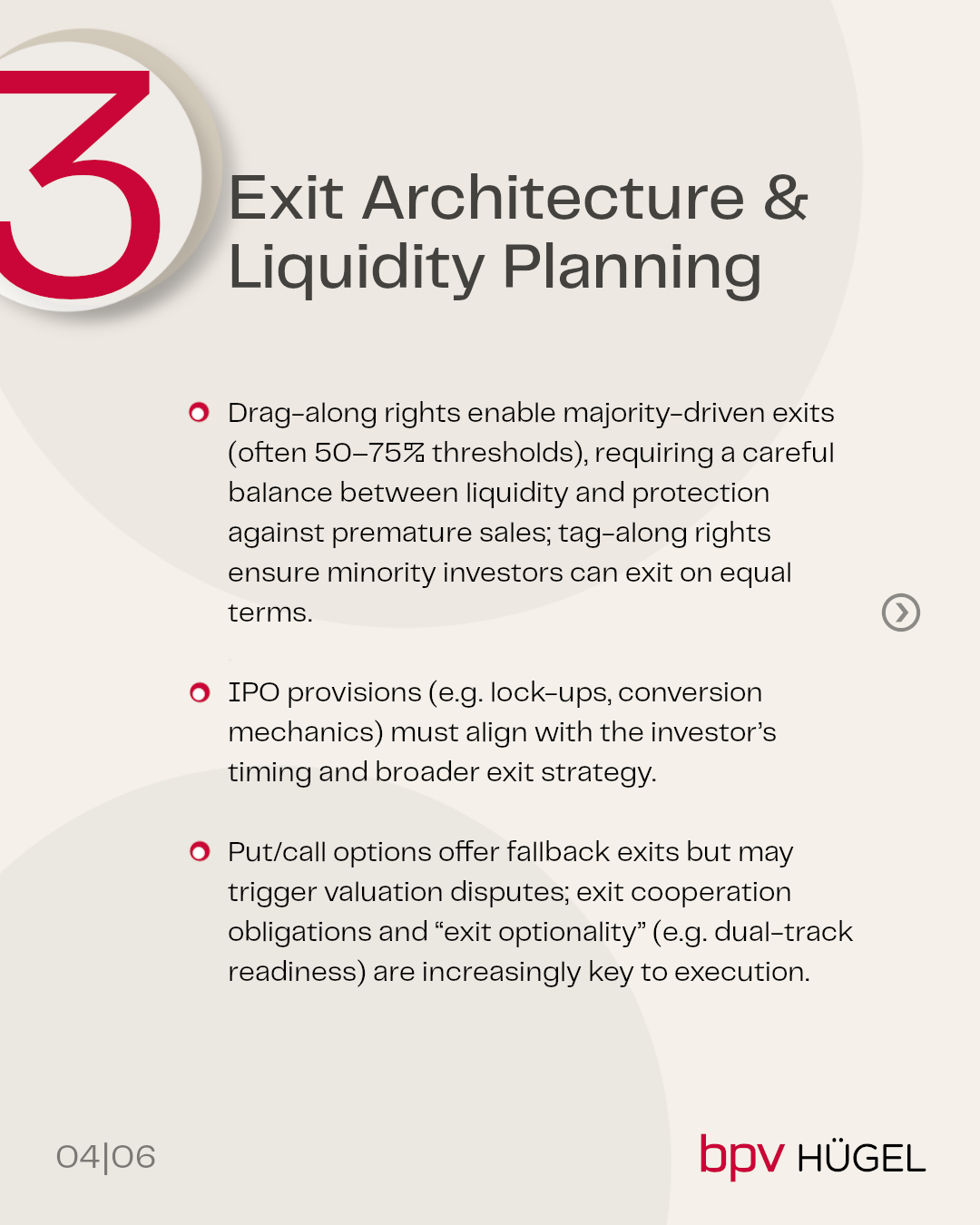
3. Exit Architecture & Liquidity Planning
- Drag‑along rights enable majority‑driven exits (often 50–75% thresholds), requiring a careful balance between liquidity and protection against premature sales; tag‑along rights ensure minority investors can exit on equal terms.
- IPO provisions (e.g. lock‑ups, conversion mechanics) must align with the investor’s timing and broader exit strategy.
- Put/call options offer fallback exits but may trigger valuation disputes; exit cooperation obligations and “exit optionality” (e.g. dual‑track readiness) are increasingly key to execution.
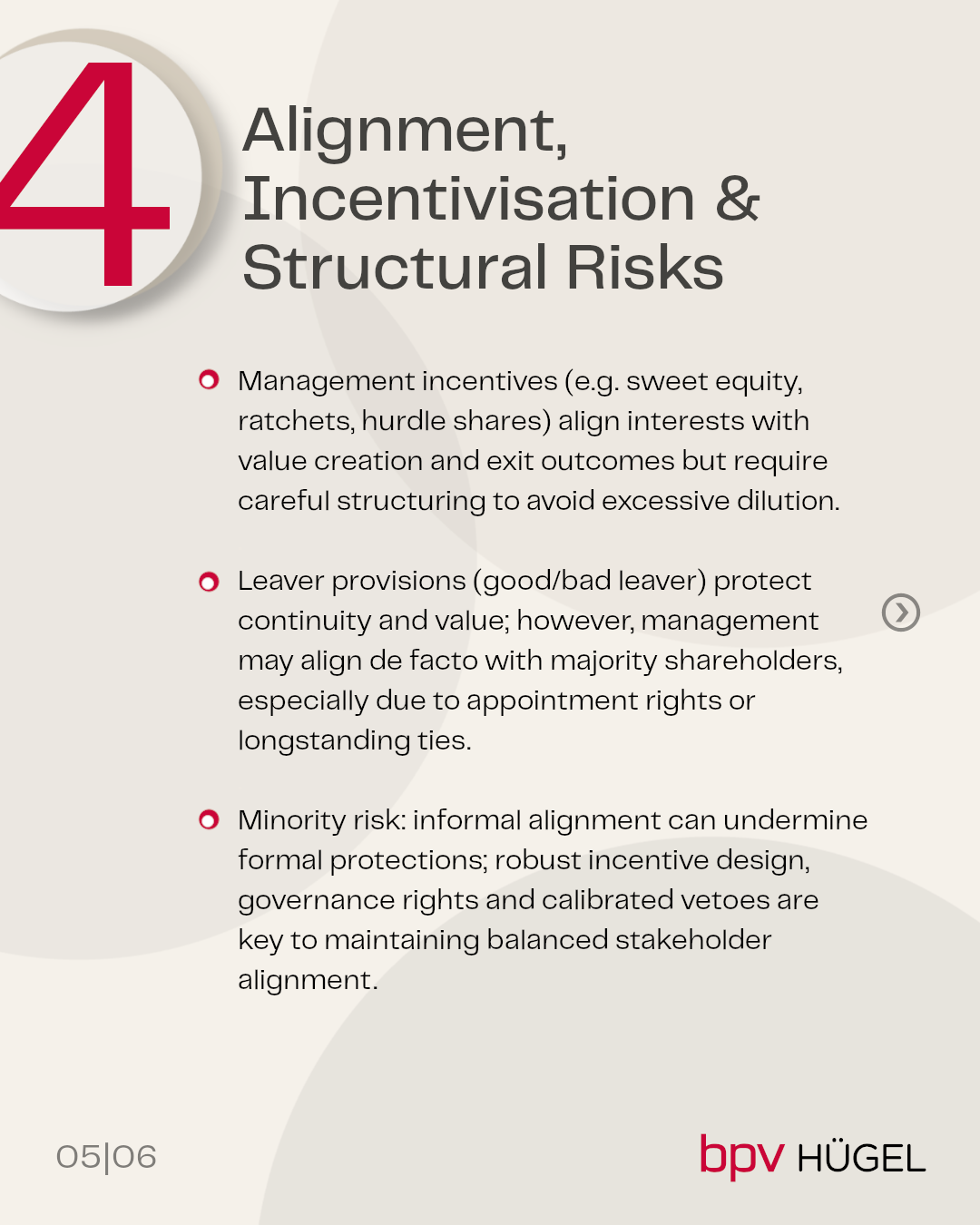
4. Alignment, Incentivisation & Structural Risks
- Management incentives (e.g. sweet equity, ratchets, hurdle shares) align interests with value creation and exit outcomes but require careful structuring to avoid excessive dilution.
- Leaver provisions (good/bad leaver) protect continuity and value; however, management may align de facto with majority shareholders, especially due to appointment rights or longstanding ties.
- Minority risk: informal alignment can undermine formal protections; robust incentive design, governance rights and calibrated vetoes are key to maintaining balanced stakeholder alignment.
5. Risk Allocation, Liability & Capital Structure
- Warranty protection is more limited in minority deals; investors rely instead on specific indemnities and downside protections, including W&I insurance, as post‑closing remediation through control may be challenging.
- Risk allocation is contract‑driven: unlike control‑based majority deals (enabling operational influence), enforcement depends on precise drafting and upfront risk identification.
- Capital structure is critical: equity vs shareholder loans affects returns and insolvency ranking; minority investors need safeguards over future financing to avoid leverage‑driven risk shifts without influence.
Author:
Michal Dobrowolski
Practice group:
Corporate|M&A
 Teilen
 Twittern
 Teilen