04 May 2026 – need2know
Defence sector M&A in Austria has moved beyond a niche segment. Regulatory considerations frequently dictate deal structure, timing and value preservation.
In Austrian defence transactions, early classification analysis, licence‑focused diligence and robust governance design have become decisive factors – essential to transaction certainty, execution quality and ultimately exitability.
In our third M&A Spotlight edition (vol. 3), bpv Huegel PE/M&A partner Michal Dobrowolski explores “Defence Sector M&A in Austria – What to Watch Out for”, focusing on five pressure points that increasingly determine whether defence‑related transactions can proceed at all. These include foreign direct investment (FDI) screening, as well as export control and licence‑related constraints.
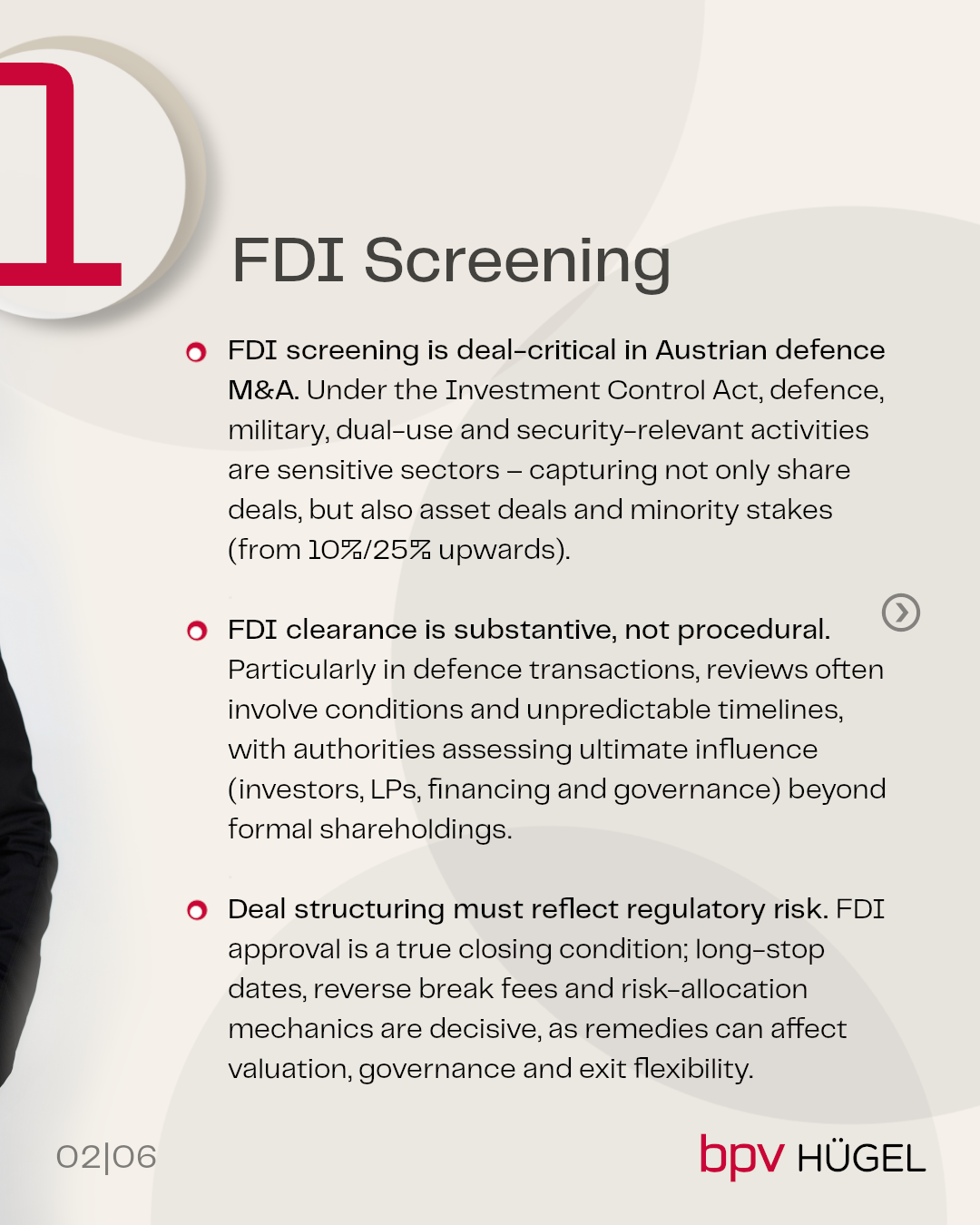
1. FDI Screening
- FDI screening is deal‑critical in Austrian defence M&A. Under the Investment Control Act, defence, military, dual‑use and security‑relevant activities are sensitive sectors – capturing not only share deals, but also asset deals and minority stakes (from 10%/25% upwards).
- FDI clearance is substantive, not procedural. Particularly in defence transactions, reviews often involve conditions and unpredictable timelines, with authorities assessing ultimate influence (investors, LPs, financing and governance) beyond formal shareholdings.
- Deal structuring must reflect regulatory risk. FDI approval is a true closing condition; long‑stop dates, reverse break fees and risk‑allocation mechanics are decisive, as remedies can affect valuation, governance and exit flexibility.
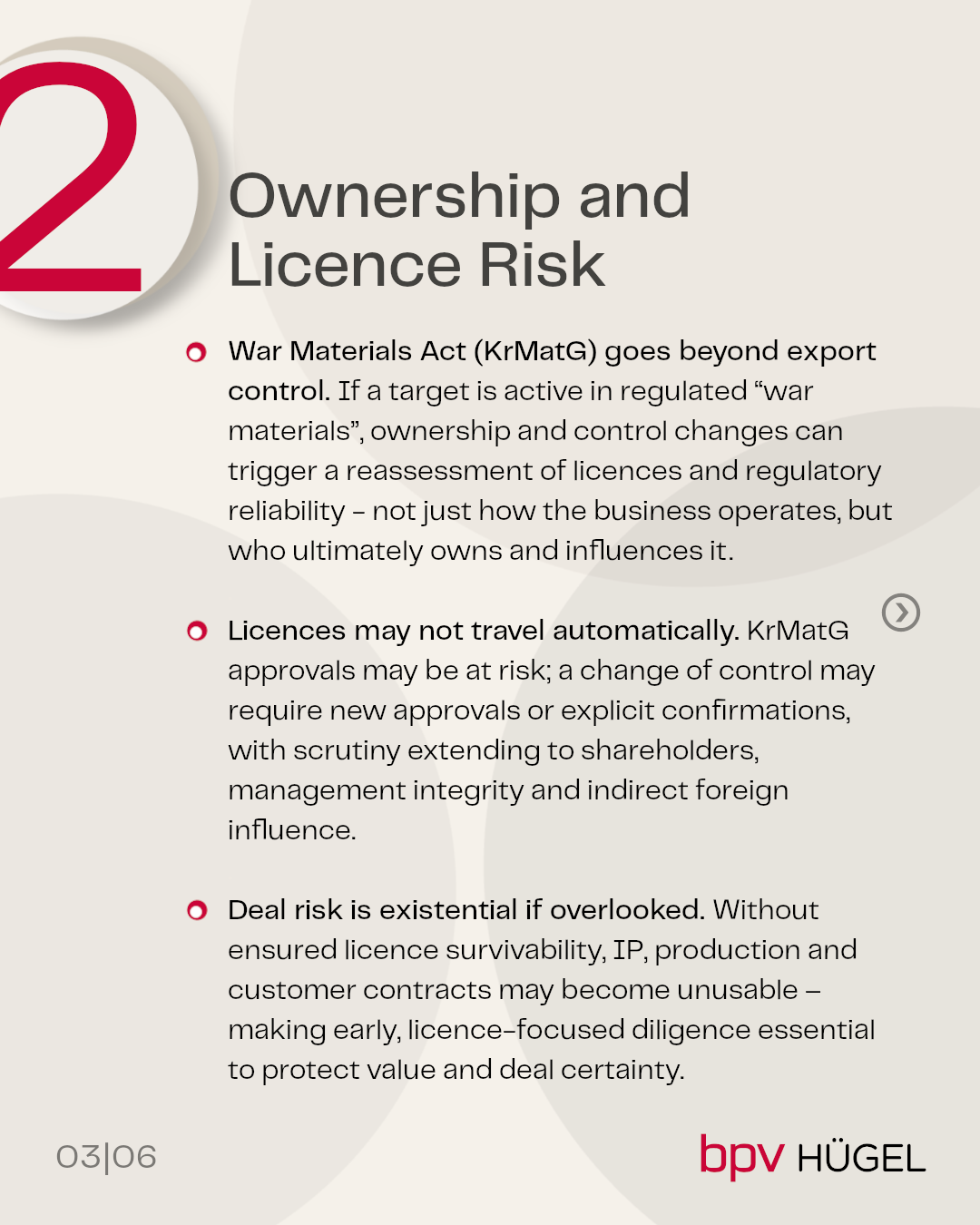
2. Ownership and Licence Risk
- War Materials Act (KrMatG) goes beyond export control. If a target is active in regulated “war materials”, ownership and control changes can trigger a reassessment of licences and regulatory reliability -not just how the business operates, but who ultimately owns and influences it.
- Licences may not travel automatically. KrMatG approvals may be at risk; a change of control may require new approvals or explicit confirmations, with scrutiny extending to shareholders, management integrity and indirect foreign influence.
- Deal risk is existential if overlooked. Without ensured licence survivability, IP, production and customer contracts may become unusable – making early, licence‑focused diligence essential to protect value and deal certainty.
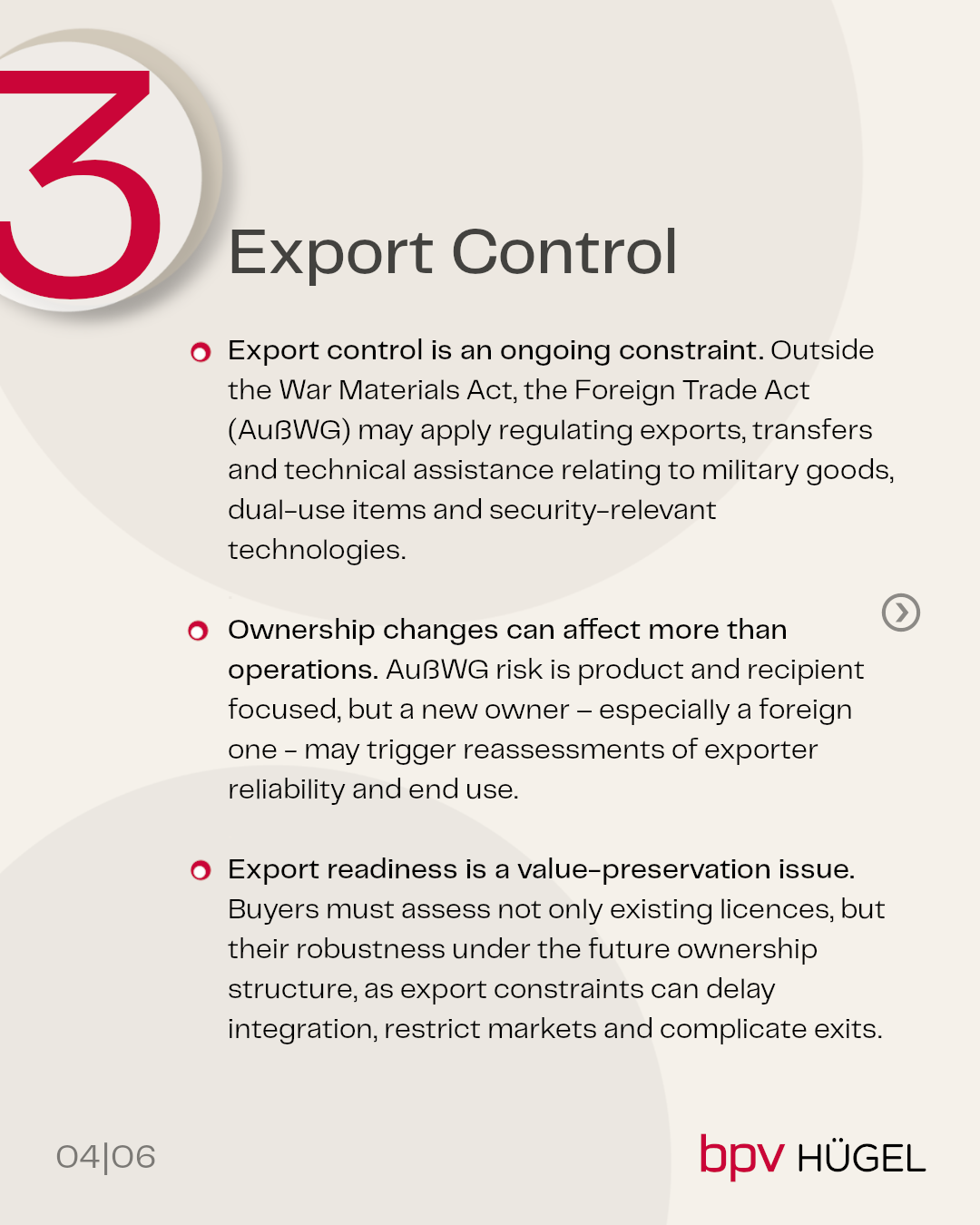
3. Export Control
- Export control is an ongoing constraint. Outside the War Materials Act, the Foreign Trade Act (AußWG) may apply regulating exports, transfers and technical assistance relating to military goods, dual‑use items and security‑relevant technologies.
- Ownership changes can affect more than operations. AußWG risk is product and recipient focused, but a new owner – especially a foreign one -may trigger reassessments of exporter reliability and end use.
- Export readiness is a value-preservation issue. Buyers must assess not only existing licences, but their robustness under the future ownership structure, as export constraints can delay integration, restrict markets and complicate exits.
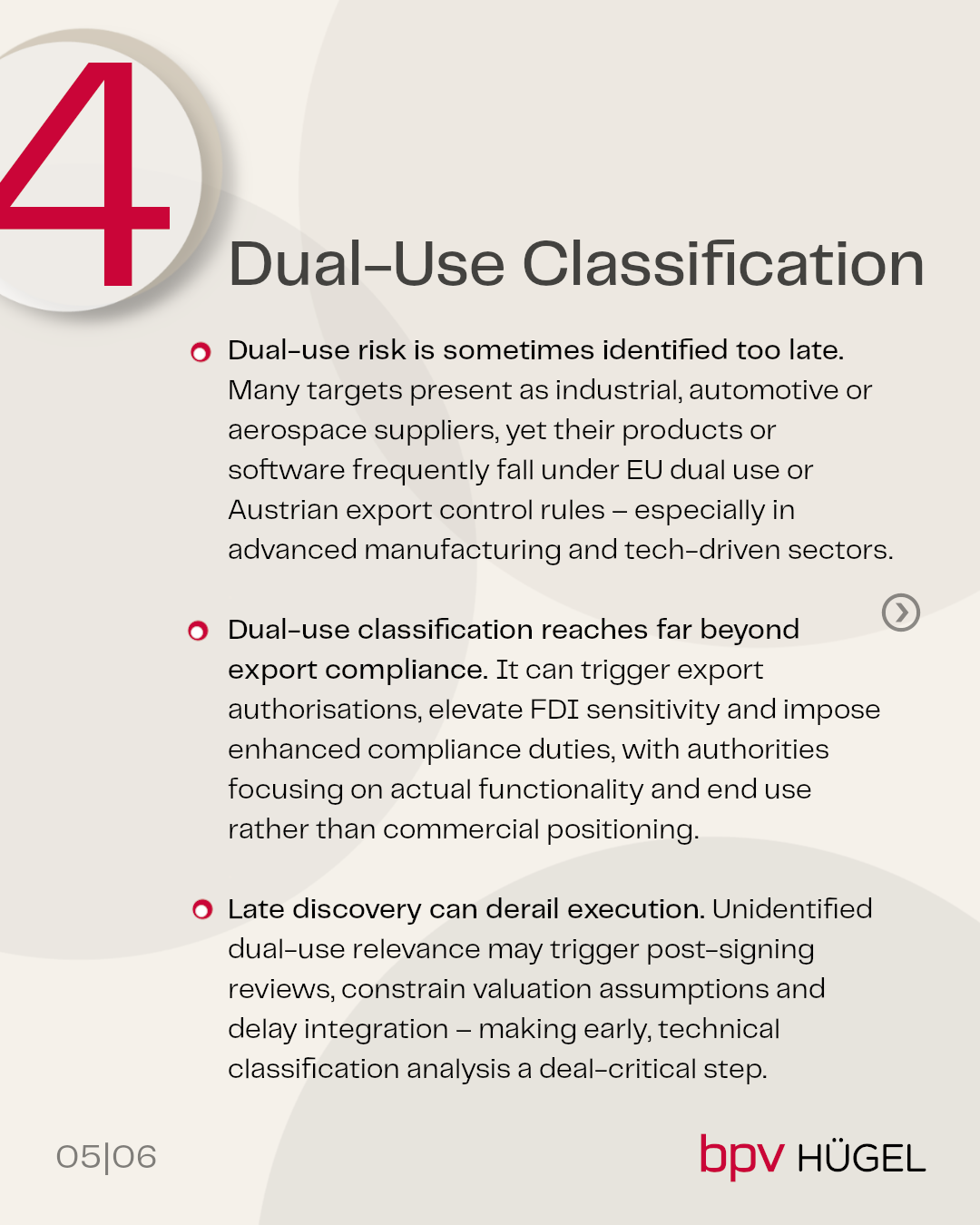
4. Dual‑Use Classification
- Dual‑use risk is sometimes identified too late. Many targets present as industrial, automotive or aerospace suppliers, yet their products or software frequently fall under EU dual‑use or Austrian export‑control rules – especially in advanced manufacturing and tech‑driven sectors.
- Dual‑use classification reaches far beyond export compliance. It can trigger export authorisations, elevate FDI sensitivity and impose enhanced compliance duties, with authorities focusing on actual functionality and end use rather than commercial positioning.
- Late discovery can derail execution. Unidentified dual‑use relevance may trigger post‑signing reviews, constrain valuation assumptions and delay integration – making early, technical classification analysis a deal‑critical step.
5. Management, Governance & Security Clearance
- Reliability and Integrity. Authorities assess also the reliability and integrity of key managers and board members, including potential security clearances and scrutiny of “shadow control” through veto or information rights.
- Minority stakes are not automatically safe. Extensive governance rights or management incentive plans can trigger control concerns, even where shareholdings remain below thresholds.
- Early governance design is critical. Mapping decision rights and stress‑testing vetoes before SPA finalisation can materially reduce execution risk and late‑stage restructuring.
Author:
Michal Dobrowolski
Practice group:
Corporate|M&A
 Share
Share Tweet
Tweet Share
Share